

0. Quick Overview

About Ecopart in 10 seconds
This project is about designing trust, predictability, and structured decision-making as actual product mechanisms. Mechanisms that do something. The core problem: rental platforms optimize for speed, not for confident decisions. Users commit when they are still uncertain, platforms take zero responsibility for match quality, and the result is weak matches, unstable tenancies, and people who regret moving in two weeks later. The main barrier to shared living is not affordability. It is perceived risk. People are not afraid of paying rent. They are afraid of ending up in a bad situation with strangers. Ecopart reframes shared living as a coordination problem and introduces structure before commitment, not after.
1. Introduction
About Ecopart

This project explores a trust-first mobile platform for room rentals and shared living. A single system that supports the full journey: discovery, viewing, application, and rental management.
Two connected roles in one product:
- Residents renting rooms in shared apartments
- Property owners placing apartments under management
Product focus
Instead of optimizing for speed or short-term profit, I designed the experience to reduce uncertainty in shared living and support confident, long-term housing decisions.
Design goal
My main goal is to turn shared living from a risky compromise into a deliberate, comfortable choice.
2. Problem & Opportunity
Problem
I started with qualitative interviews, and the pattern was consistent: despite clear economic advantages, people hesitate to consider shared living. The core barrier is not price. It is perceived safety. People are reluctant to share a home with strangers because of fear of uncertainty, lack of control, and potential negative experiences. That insight became the foundation for every product decision in this case study.
Opportunity
This creates a clear opportunity for a structured, trust-first platform that reduces uncertainty and aligns what residents need with what property owners need.
For the business, this means:
- Better match quality and fewer early move-outs
- Higher long-term retention and contract stability
- Predictable recurring revenue from managed rentals
- Lower operational costs through structured flows and guided support

Market gap
Most rental platforms focus on fast booking and listings. Speed, speed, speed. The result? Users face uncertainty, weak matching, and unstable outcomes. Nobody is building around trust and predictability. That is the gap.
3. Research & Insights
What I wanted to understand
The psychological and practical barriers preventing users from choosing shared living, even when it makes financial sense.
How I researched it
- Qualitative interviews with target users
- Behavioral pattern analysis across decision stages
- Market and competitor review to identify structural gaps

What I found
- Lack of trust is the primary adoption barrier. Users fear uncertainty about safety, predictability, and who they will live with.
- Emotional risk outweighs financial benefit. Affordability alone does not drive the decision. People would rather pay more for a studio than share with strangers they cannot trust.
- Ambiguous rules, unknown roommates, and weak platform responsibility increase perceived risk and make users hesitate even more.

4. Product Strategy
Strategic goal
- Increase adoption of shared living by reducing perceived risk and emotional stress.
My approach
Shift the product from speed-driven transactions to trust-driven decision-making. Build confidence before commitment, not after. Everything in this strategy comes from that single shift.
Product principles
- Trust over speed
- Predictability over flexibility
- Structure over ambiguity
- Guidance in high-risk moments
How this translates into product mechanisms
- Make safety and reliability visible way before user makes rental decisions
- Reduce uncertainty through clear, structured steps
- Improve match quality rather than maximize transactions
- Support long-term stability over short-term conversion
5. Target Users & Use Cases
Core audience
- Young professionals (25-35) in large cities with above-average income. They can afford it but they want to feel safe about it.
- Young couples (25-32) trying to find ways to save for a mortgage down payment. They are not here because they have no choice. They are here because it is a smart financial move, and they need the experience to match that decision.
- Property owners who want hands-off management and reliable tenants. They do not want to deal with constant turnover and problem tenants.
Secondary audience
- Graduate students and early-career professionals with stable income who value safety over the cheapest option
- International students and expats who need a predictable move-in process in an unfamiliar country
- People in life transitions (relocation, breakup, first job) who need stability quickly

Use cases and user stories
Young professional
I just moved to a new city for work. I do not know anyone here. I need a place that is safe, comfortable, and where the rules are clear from day one so I can focus on my job and my life, not on worrying about my living situation.
Young couple
We are saving for our own place. Shared living makes financial sense for us right now, but we need to trust the service, trust the conditions, and know exactly what we are paying and what we are getting. No surprises.
Property owner
I have an apartment but no time or desire to manage tenants. I want a service that handles everything, brings reliable people, and gives me stable income without me chasing late payments or dealing with conflicts.
6. Key User Journeys
The product is built around a small number of core journeys that guide users from discovery to long-term living. Each journey is designed to reduce uncertainty and support confident decision-making at every stage. Every transition between stages has a clear trigger and a clear set of expectations.

7. Solutions
The central question
How can a product reduce perceived risk and make shared living feel safer and more predictable?
The answer is not one feature. It is a set of deliberate mechanisms embedded throughout the rental journey. Each one translates a research insight into a concrete product decision. Together, they form a system.

Core solution: Trust-building through verification
Problem
Users perceive shared living as risky due to unknown roommates and low predictability.
Solution
Safety is made visible before commitment through identity verification, mandatory viewing, and clear eligibility rules. You know who you are living with. They know who you are. The platform takes responsibility for that
Impact
Higher perceived safety, better match quality, fewer early drop-offs.

1. Viewing before renting
Problem
Users fear mismatched expectations and making a wrong decision about where they will live.
Solution
Every rental begins with a guided viewing, online or in person, before any commitment. I added this step on purpose. You cannot skip it. Because an informed decision beats a hopeful one, and one extra step now prevents regret later.
Impact
Reduced anxiety, fewer mismatches, more confident decisions.

2. Structured rental flow
Problem
Unclear next steps increase cognitive load and uncertainty during the moments that matter most.
Solution
A predictable, step-by-step process guides users from application to contract and move-in. Clear states, clear actions, clear expectations at every stage. Users can only apply to rent a room after the viewing is completed. The system enforces the order because the order is what builds confidence.
Impact
Lower cognitive load, higher completion, fewer support requests.

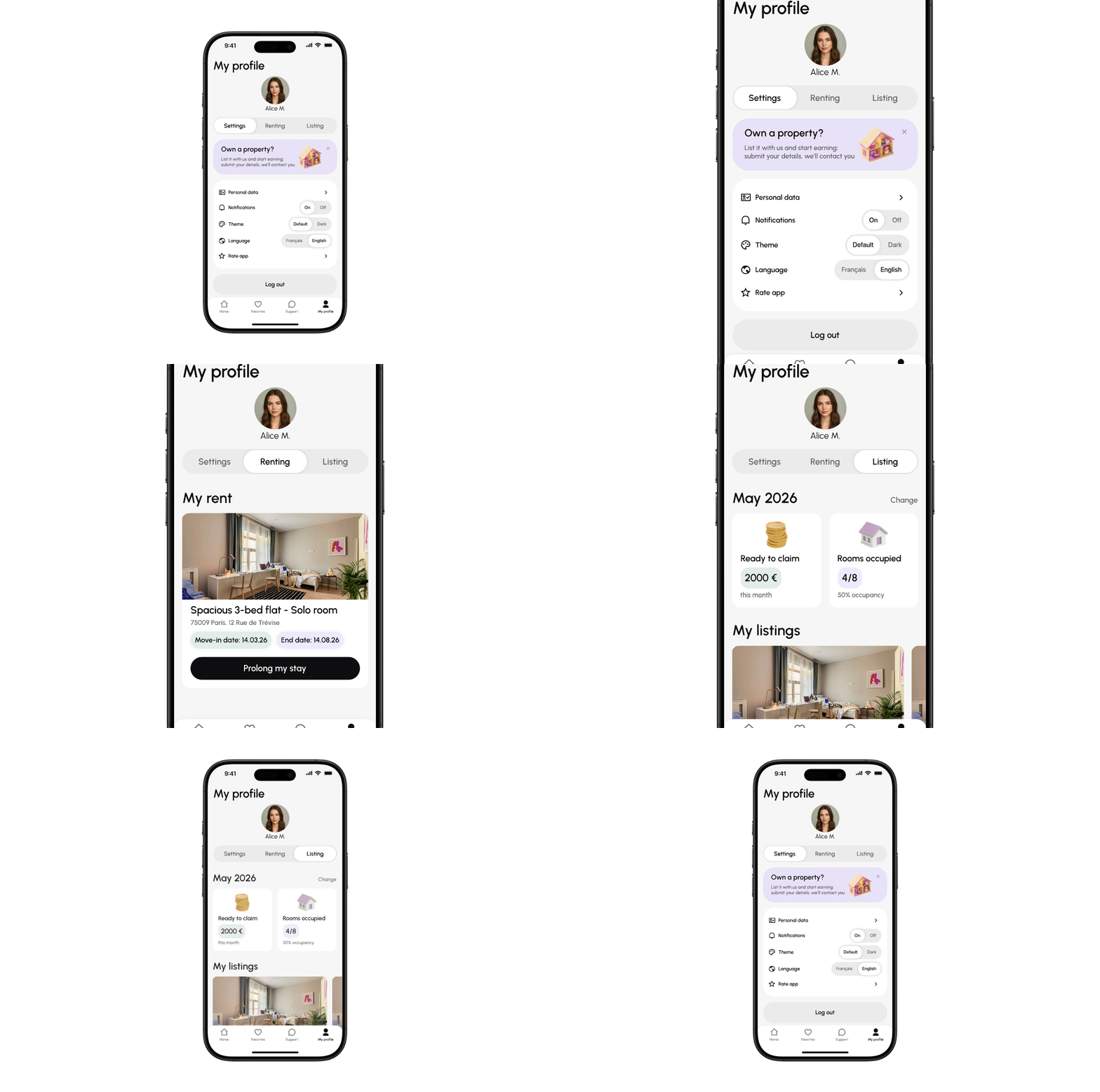
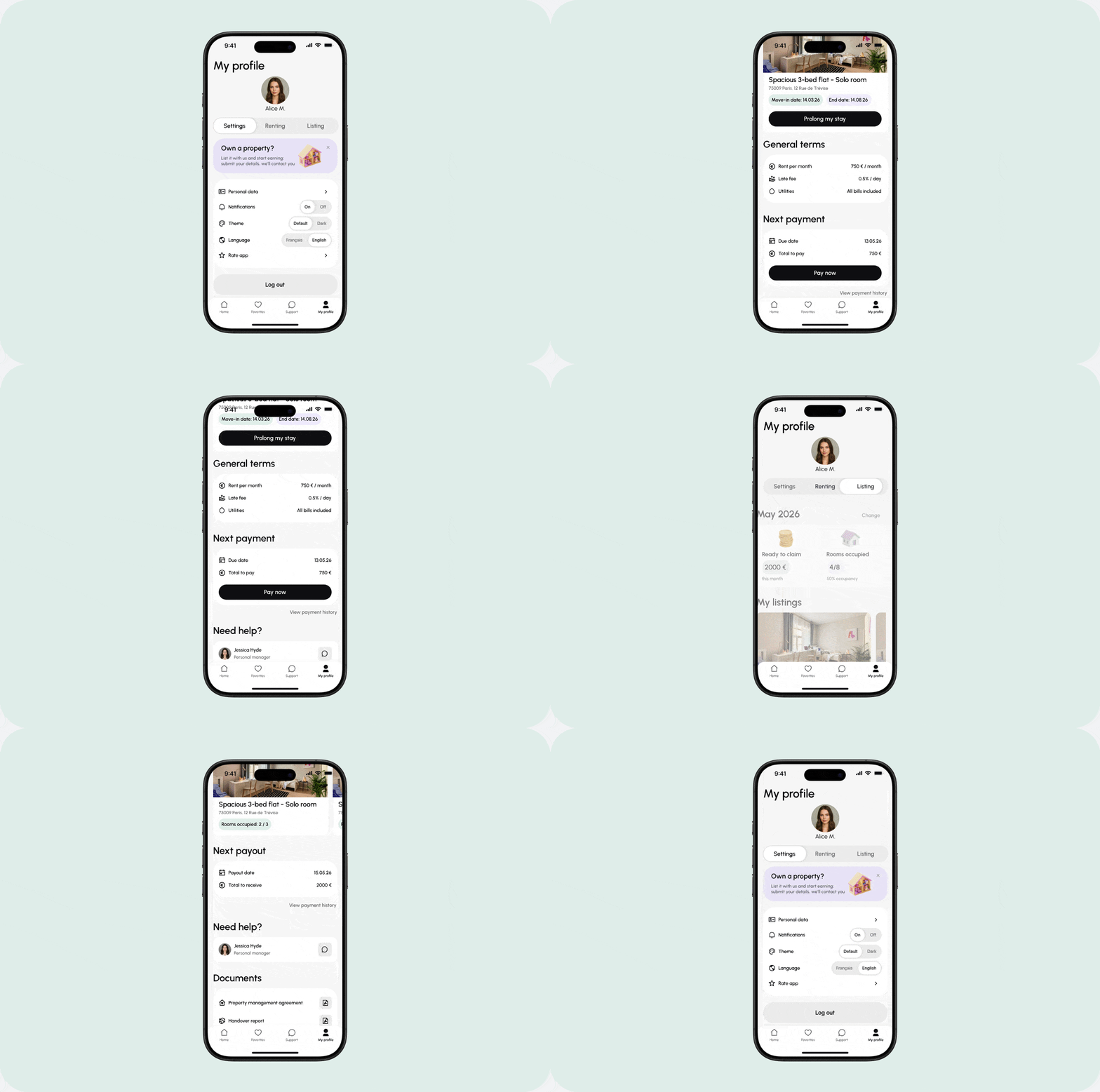
3. Personal dashboard
Problem
After move-in, often information is fragmented. Contracts in email, payment dates in a message somewhere, house rules in a PDF nobody saved.
Solution
A single dashboard centralizes everything: address, dates, payments, terms, documents, and support access. No hunting through emails. No confusion. When a user needs something, they find it immediately.
Impact
Clarity, control, and reduced post-move anxiety. That is not a feature. That is respect for someone's time.
4. Support architecture
Problem
High user uncertainty leads to constant direct contact with managers. That increases response time, operational costs, and slows down resolution for everyone.
Solution
The support flow is structured to resolve most issues without a manager. Users are guided to quick-access options first: FAQs, emergency help, neighbor complaints, repair requests, bug reporting. Live chat with a manager is there, but as a last resort, not the first option. The idea is simple: if a question can be answered without a human, it should be.
Impact
Faster resolution for common issues, reduced manager workload, lower operational costs. The support team handles what actually needs a human, not repetitive questions.

5. Emotional design & micro-interaction

Problem
Housing search is stressful. Steps like verification and applying for rent increase anxiety, and that is where people drop off.
Solution
I gave the app a character. Literally. A mascot that lives in the whole journey. It celebrates when your booking is confirmed. It is honest when something breaks. It gets super sad when you want to leave. It shows up in the boring parts, the frustrating parts, the good parts. Everywhere.
This is not decoration. It is a tiny guide that makes the whole experience feel less like a cold service and more like someone is actually there with you. During error states and technical issues, it acknowledges what you feel instead of pretending everything is fine.
Impact
Reduced perceived stress, improved task completion during high-friction stages, and sustained engagement throughout the journey.
8. System Thinking

The product is designed as a coordinated ecosystem, not a set of isolated features.
Unified platform model
The platform acts as an intermediary layer between residents, properties, and owners. Contracts, payments, and lifecycle transitions are all managed in a single system.
Lifecycle architecture
The experience follows a clearly defined rental lifecycle:

Each stage determines available actions, system behavior, and user expectations.
Information continuity
Core data persists across the entire lifecycle: rental terms, payment schedule, documents, support history. No fragmented processes. Everything lives in one place, accessible at any point.
Operational standardization
Rental operations are standardized through a unified contract model, centralized coordination, and defined lifecycle states. This reduces manual complexity and supports scalability across properties. The system works because it is a system. Every part supports every other part.
9. Business & Impact
The product was designed to support a stable, predictable rental model.
Revenue model
- Margin between room price and owner payout
- Minimum lease duration (4+ months) increases stability
- Late fees and structured payments reinforce discipline
- Room-based leasing improves yield per property
Business impact
- Better match quality leads to fewer early move-outs
- Structured flow reduces operational conflicts
- Predictable process strengthens retention
- Centralized model supports consistent platform performance

Operational efficiency
- Standardized contracts reduce legal and coordination overhead
- Lifecycle states streamline operations
- Self-service support lowers manager workload
- Unified system supports scalable property management
Long-term value
The model introduces more structure upfront. That is intentional. Because it enables higher retention, more stable contracts, better tenant-owner alignment, and predictable recurring revenue. It is more expensive to find a new tenant than to keep an existing one. I designed for the existing one.
10. Trade-offs
Designing this model required deliberate trade-offs. Some decisions intentionally add friction to improve match quality and operational predictability. I am not pretending there are no costs:
Trust vs Speed
Verification and mandatory viewing slow initial conversion. But they reduce uncertainty and improve rental stability. Fewer mismatches, more reliable tenancies.
Friction vs Commitment
Extra steps also increase short-term effort. But they lead to more confident decisions and lower early churn. Higher-quality commitments for longer.
Structure vs Flexibility
Standardized contracts and defined lifecycle states limit flexibility. But they ensure clarity and consistent system behavior. Smoother operations, easier scaling.
Safety vs Maximum occupancy
Strict screening may reduce short-term fill rate. But it protects residents, property condition, and long-term platform performance. As long as platform’s reputation. Stronger retention, sustainable growth.
Responsibility vs Simplicity
Centralized mediation increases system complexity. But it keeps interactions consistent and coordinated. Lower uncertainty, more predictable operations.
Open questions I am still thinking about:
- How much friction is too much?
- Could mandatory viewing reduce the top of the funnel too aggressively?
11. Expected Outcomes
These outcomes reflect the anticipated impact of a trust-first, structured rental model:
- Reduced early drop-off risk
- Increased decision confidence
- Lower cognitive load during critical steps
- Improved match quality and tenancy stability
12. Validation Thinking
What should be validated
- Does mandatory viewing actually improve match quality?
- Does the structured application reduce early drop-offs?
- Does visible verification increase decision confidence?
- Does self-service support lower operational load?
How to measure
- Viewing to application conversion rate
- Early move-out rate
- Support ticket volume
- Completion rate during verification
13. Key Takeaways
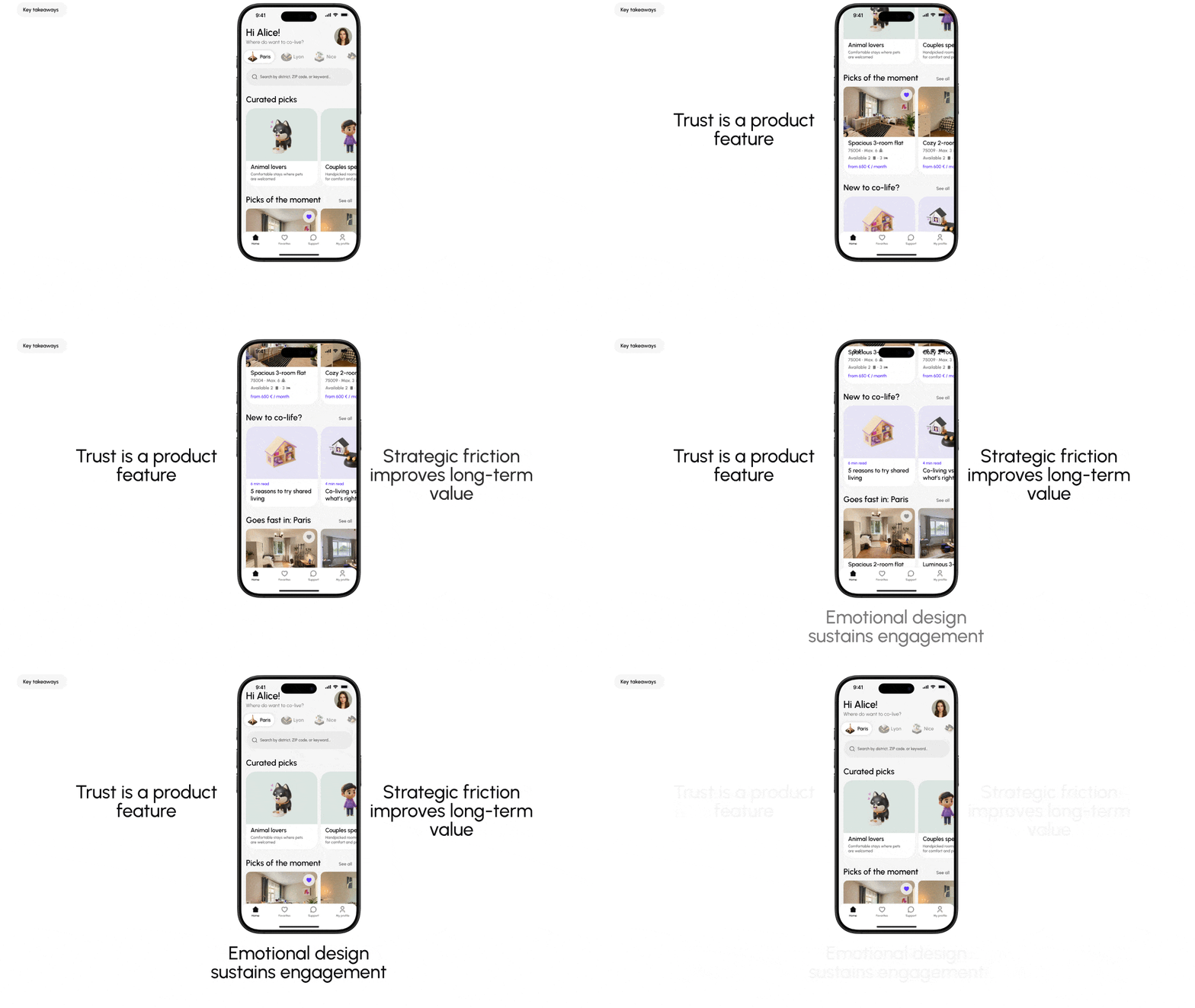
Beyond the interfaces, this project demonstrates a systems-level approach to product thinking. Here’s the main takeaways:
- Trust is a core product mechanism, not a nice-to-have
- Strategic friction improves long-term value when applied at the right moments
- Emotional design sustains engagement through the parts of the journey that nobody enjoys but everyone has to go through
- A system works because it is a system. Take one piece out and the rest feels incomplete.
14. Links & Assets

Project details
Role: Product Designer (end-to-end) Timeline: November 2025 — February 2026 Platform: Mobile (iOS, Android) Tools: Figma, Jitter Type: Case study, full product design from scratch Industry: Proptech, co-living, shared housing, room rental Skills: Product Design, Product Thinking, UX Design, UI Design, Trust Architecture, Intentional Friction, Interaction Design, Identity Verification UX, Onboarding Flow Design, Emotional Design, Mascot System, Design Systems, Information Architecture, User Research, User Interviews, Prototyping, Systems Thinking, Support Architecture Location: Marseille, France Open to: Remote product designer roles in SaaS, fintech, proptech across Europe