

0. Quick Overview

About Ecopart in 10 seconds
- This project designs trust, predictability, and structured decision-making as core product mechanisms
- Speed-driven rental platforms often produce weak matches and unstable tenancies
- The main barrier to shared living is perceived risk, not affordability
Underlying system problem
- Rental platforms optimize for speed, not decision confidence
- Users commit under uncertainty while platforms take little responsibility for match quality
- This leads to weak matches and unstable tenancies
- Ecopart reframes shared living as a coordination problem, introducing structure before commitment
1. Introduction
About Ecopart

This project explores a trust-first mobile platform for room rentals and shared living, built around one question:
How can strangers safely share a home?
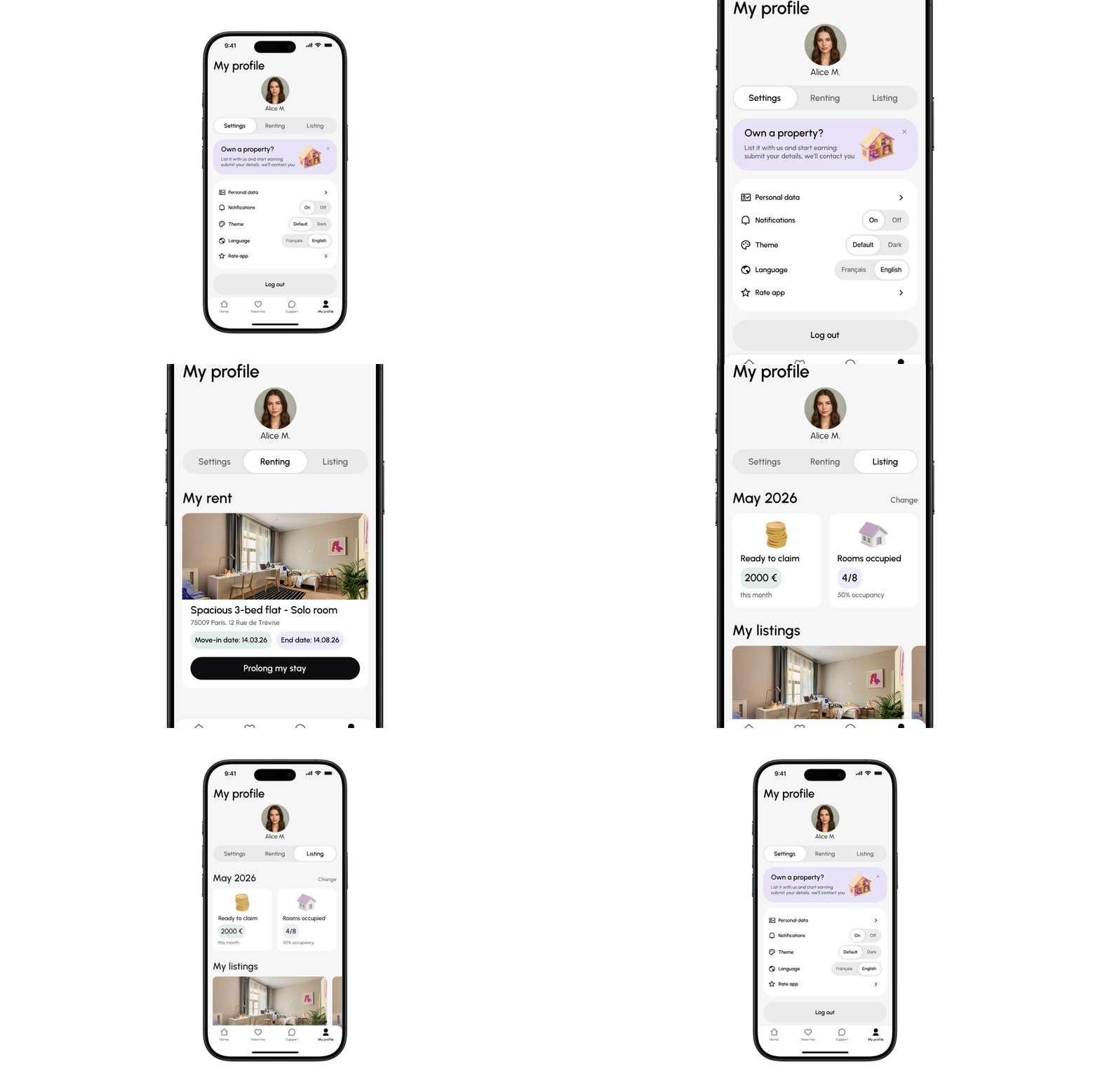
What it is:
A single system that supports the full journey:
- discovery → viewing → application → rental management
Two connected roles in one product:
- Residents renting rooms in shared apartments
- Property owners placing apartments under management
Product focus:
Instead of optimizing for speed or short-term profit, the experience is designed to:
- reduce uncertainty in shared living
- support confident long-term housing decisions
Design goal:
Create flows and interfaces that turn shared living from a risky compromise into a deliberate, comfortable choice.
2. Problem & Opportunity
Problem
Early qualitative interviews with target users revealed a consistent pattern: despite clear economic advantages, many potential residents hesitate to consider shared living.
The core barrier is not price, but perceived safety. Users are reluctant to share a home with unfamiliar people due to fear of uncertainty, lack of control, and potential negative experiences.
This insight became the foundation for key product decisions shown later in this case study.
Opportunity
This creates a clear opportunity for a structured, trust-first platform that reduces uncertainty and aligns incentives between residents and property owners.
Business opportunity
- Improve match quality and reduce early move-outs
- Increase long-term retention and contract stability
- Generate predictable recurring revenue from managed rentals
- Reduce operational cost through structured flows and guided support.

Market gap
Most existing rental solutions focus on fast booking and listings rather than trust and predictability. As a result, users face uncertainty, weak matching, and unstable rental outcomes. This creates an opportunity for a platform designed around structured decision-making and long-term relationship stability.
3. Research & Insights
Research goal:
Understand the psychological and practical barriers preventing users from adopting shared living despite clear economic benefits.
Method:
- Qualitative interviews with target users
- Behavioral pattern analysis across decision stages
- Market and competitor review to identify structural gaps
Research scope and evidence are summarized below.

Key insights
- Lack of trust is the primary adoption barrier; users fear uncertainty about safety, predictability, and who they will live with
- Emotional risk outweighs financial benefit; affordability alone does not drive decision-making
- Ambiguous rules, unknown roommates, and weak platform responsibility increase perceived risk and hesitation

4. Product Strategy
Strategic goal
- Increase adoption of shared living by reducing perceived risk and emotional stress.
Core approach
Shift the product from speed-driven transactions to trust-driven decision making.
Design the experience to build confidence before commitment, not after.
Product principles
- Trust over speed
- Predictability over flexibility
- Structure over ambiguity
- Guidance in high-risk moments
Strategic mechanisms
- Make safety and reliability visible before rental decisions
- Reduce uncertainty through clear, structured steps
- Improve match quality rather than maximize transactions
- Support long-term stability over short-term conversion
5. Target Users & Use Cases
Core audience
- Young professionals (25–35) in large cities with above-average income;
- Young couples (25–32) optimizing rent to save for a mortgage down payment;
- Property owners who want hands-off management and reliable tenants.
Secondary audience
- Graduate students / early-career professionals with stable income who value safety over the lowest price;
- International students/expats looking for a predictable and supported move-in process;
- People in life transitions (relocation, breakup, first job) who need stability quickly.

Use cases and user stories
Young professional
As a young professional who recently moved to a large city, I want to find safe and comfortable housing with clear conditions, so I can adapt to my new job and life.
Young couple
As a young couple starting independent life, we want to rent a comfortable, safe room at a reasonable rate so we can save faster for a mortgage down payment.
Property owner
As a property owner with limited time, I want to delegate apartment management to a reliable service, so I can earn stable income without daily involvement.
6. Key User Journeys
The product is built around a small number of core user journeys that guide users from discovery to long-term living. Each journey is designed to reduce uncertainty and support confident decision-making.

7. Solutions
So how can a product reduce perceived risk and make shared living feel safer and more predictable?
The answer lies not in a single feature, but in a set of deliberate mechanisms embedded throughout the rental journey. These mechanisms translate research insights into concrete product decisions that reduce uncertainty, build trust, and support confident choices at every stage of the experience.

Core solution — Trust-building
Problem
Users perceive shared living as risky due to unknown roommates and low predictability.
Solution
Safety is made visible before commitment through identity verification, mandatory viewing, and clear eligibility rules.
Impact
Higher perceived safety, better match quality, and fewer early drop-offs.

1. Viewing before renting
Problem
Users fear mismatched expectations and making the wrong decision.
Solution
Every rental begins with a guided viewing (online or in person) before any commitment.
Impact
Reduced anxiety, fewer mismatches, and more confident decisions.

2. Structured rental flow
Problem
Unclear next steps increase cognitive load and uncertainty during critical moments.
Solution
A predictable, step-by-step process guides users from application to contract and move-in, with clear states and actions.
Impact
Lower cognitive load, higher completion, and fewer support requests.

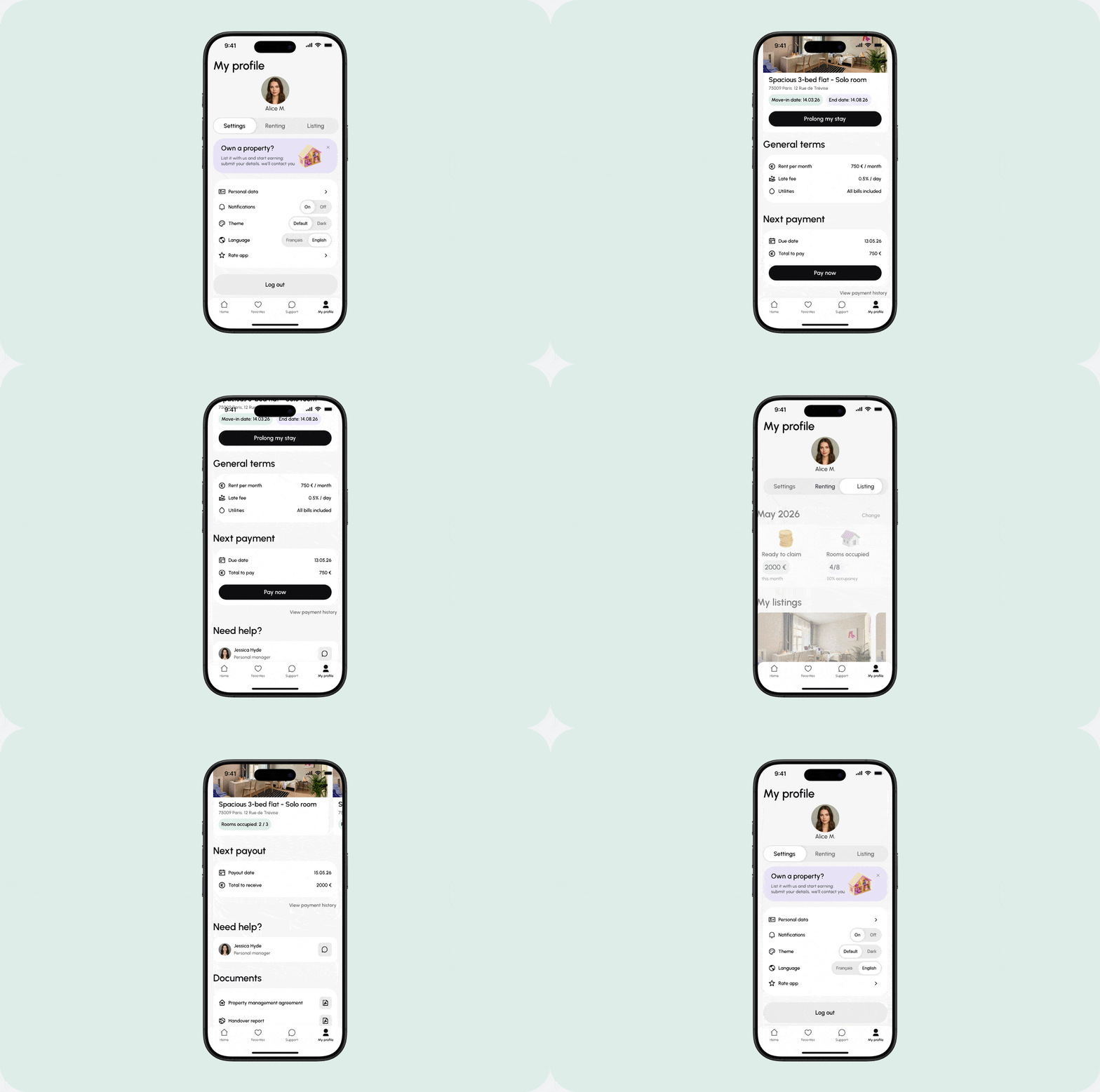
3. Personal dashboard
Problem
After move-in, information is often fragmented and stressful to manage.
Solution
A single dashboard centralizes address, dates, payments, terms, documents, and support.
Impact
Clarity, control, and reduced post-move anxiety.
4. Support architecture
Problem
High user uncertainty leads to frequent direct contact with managers, increasing response time, operational load, and support costs while slowing issue resolution.
Solution
The support flow is structured to resolve most issues without direct involvement from the manager. Users are first guided to quick-access options, including FAQs, emergency help, neighbor complaints, repair requests, and bug reporting, before being escalated to live chat when necessary.
Impact
Faster resolution for common issues, reduced manager workload, lower operational costs, and more efficient use of company resources while maintaining consistent service quality and user confidence.

5. Emotional design & micro-interaction

Problem
Housing search is inherently stressful. High-stakes steps like verification and applying for rent can increase anxiety and cognitive load, leading to hesitation and potential drop-off.
Solution
Emotional design was introduced intentionally to soften complex moments. The mascot acts as a friendly guide during slower or demanding steps, while subtle micro-interactions and animations provide reassurance and clarity, also improving engagement.
Impact
Reduced perceived stress, improved task completion during high-friction stages, and sustained engagement throughout the rental journey.
8. System Thinking

The product is designed as a coordinated ecosystem that connects residents, properties, and owners into a structured rental system rather than a set of isolated interactions.
Unified platform model
The platform acts as an intermediary layer between:
- Residents
- Properties (rooms within managed apartments)
- Owners
Contracts, payments, and lifecycle transitions are managed in a single unified system.
Lifecycle architecture
The experience follows a clearly defined rental lifecycle:

Each stage determines available actions, system behavior, and user expectations, ensuring operational consistency.
Information continuity
Core data persists across the entire lifecycle:
- Rental terms
- Payment schedule
- Documents
- Support history
This eliminates fragmented processes and centralizes management.
Operational standardization
Rental operations are standardized through:
- Unified contract model
- Centralized coordination
- Defined lifecycle states
This reduces manual complexity and supports scalability across properties.
9. Business & Impact
The product was designed to support a stable and predictable rental model.
Revenue model
- Margin between room price and owner payout
- Minimum lease duration (4+ months) increases stability
- Late fees and structured payments reinforce discipline
- Room-based leasing improves yield per property
Business impact
- Better match quality → fewer early move-outs
- Structured flow → reduced operational conflicts
- Predictable process → stronger retention
- Centralized model → consistent platform performance

Operational efficiency
- Standardized contracts reduce legal and coordination overhead
- Lifecycle states streamline operations
- Self-service support lowers manager workload
- Unified system supports scalable property management
Long-term value
While the model introduces more structure upfront, it enables:
- Higher retention
- More stable contracts
- Better tenant-owner alignment
- Predictable recurring revenue
10. Trade-offs & Constraints
Designing this rental model required deliberate trade-offs between speed, flexibility, and long-term stability. Some decisions intentionally add friction to improve match quality and operational predictability.
Trust vs Speed
Verification and mandatory viewing slow initial conversion, but reduce uncertainty and improve rental stability.
Result: fewer mismatches, more reliable tenancies.
Friction vs Commitment
Extra steps increase short-term effort but lead to more confident decisions and lower early churn.
Result: higher-quality commitments.
Structure vs Flexibility
Standardized contracts and defined lifecycle states limit flexibility but ensure clarity and consistent system behavior.
Result: smoother operations, easier scaling.
Safety vs Maximum occupancy
Strict screening may reduce short-term fill rate, but protects residents, property condition, and long-term platform performance.
Result: stronger retention, sustainable growth.
Responsibility vs Simplicity
Centralized mediation increases system complexity but keeps interactions consistent and coordinated.
Result: lower uncertainty, more predictable operations.
Open questions
- How much friction is too much?
- Could mandatory viewing reduce top-funnel?
11. Expected Outcomes
The following outcomes reflect the anticipated impact of a trust-first, structured rental model on user behavior and decision confidence:
- Reduced early drop-off risk
- Increased decision confidence
- Lower cognitive load during critical steps
- Improved match quality and tenancy stability
12. Validation Thinking
What should be validated
- Does mandatory viewing improve match quality?
- Does structured application reduce early drop-offs?
- Does visible verification increase decision confidence?
- Does support self-service lower operational load?
How to measure
- Viewing → Application conversion rate
- Early move-out rate
- Support ticket volume
- Completion rate during verification
13. Key Takeaways
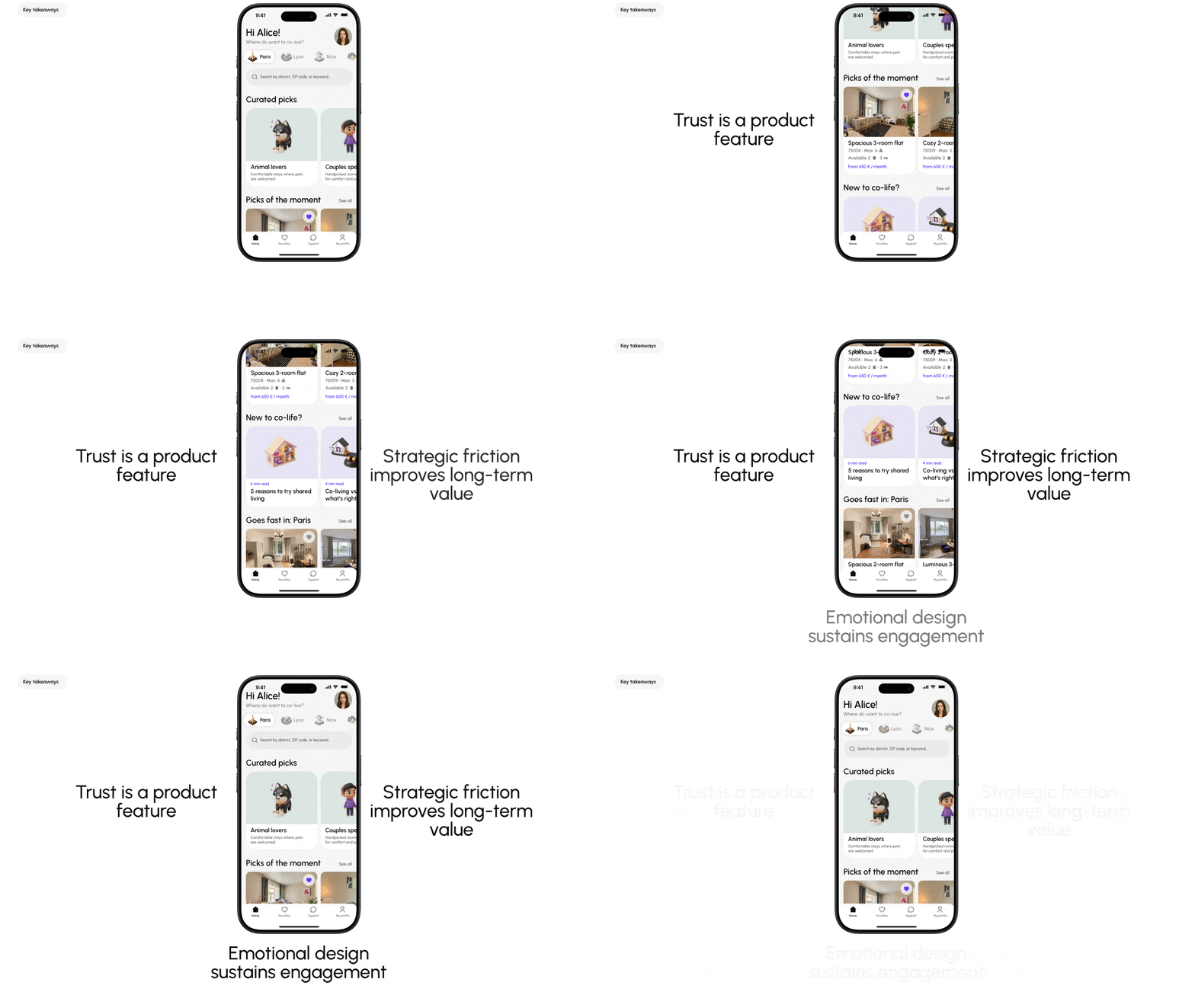
Beyond interface design, this project demonstrates a systems-level approach to product thinking and long-term value creation. Here’s the main takeaways:
- Trust is a core product feature
- Strategic friction improves long-term value
- Emotional design sustains engagement
14. Links & Assets
